In this series, we are taking an in-depth look into multiple trees mentioned in God’s Word. Throughout Scripture, many types of trees are named and used as examples or metaphors. In this blog series, we’re looking at several referenced in the Bible:
- Fig
- Acacia
- Olive
- Oak
- Palm
- Sycamore
- Cedar
The past three parts have covered the olive tree, the fig tree, and the cedar tree. This time, we’ll be looking at the oak tree, with its historical and geographical significance, as well as its importance to believers today.
Territory Markers
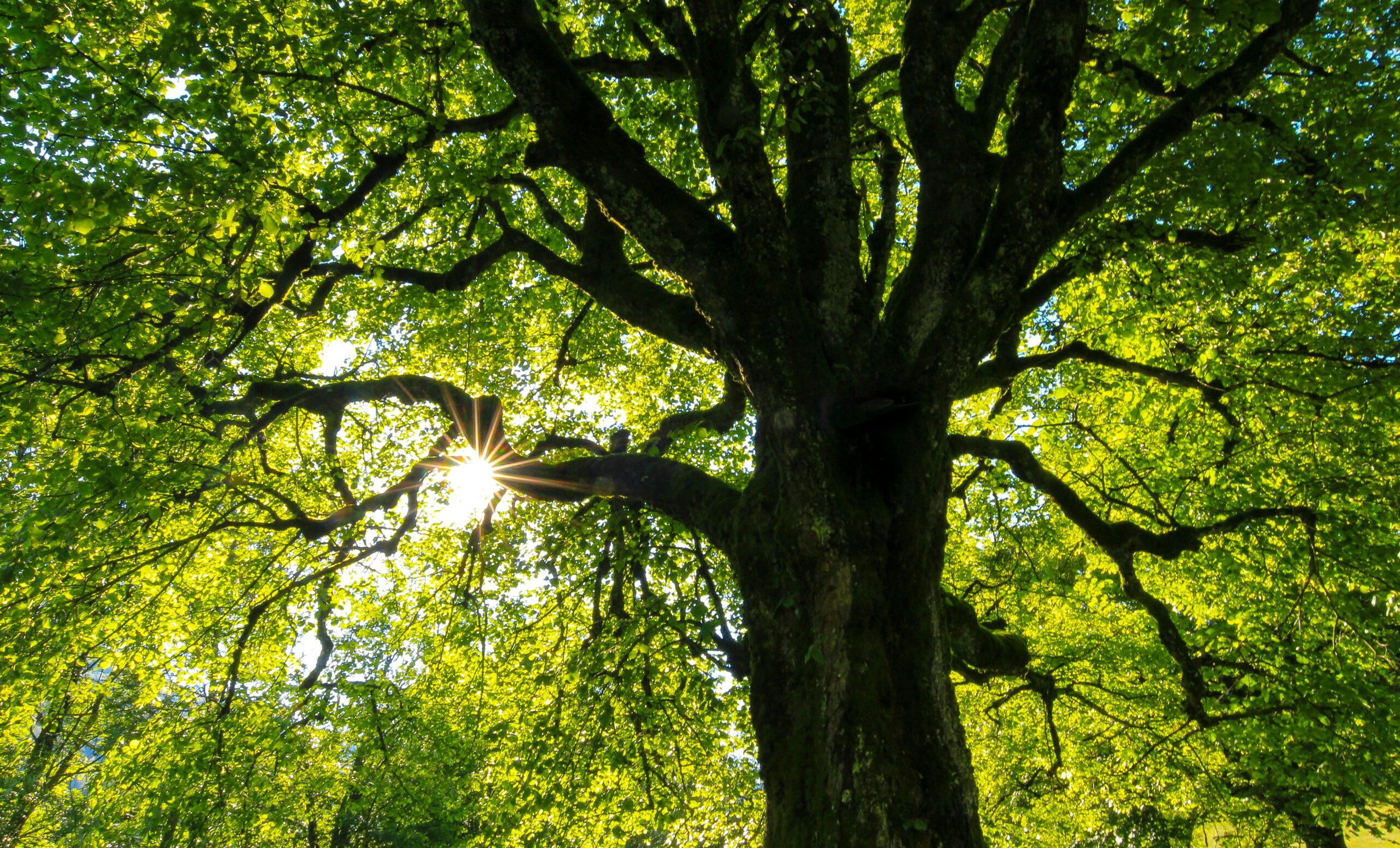
Oaks, as strong and stately trees, represented regions or territories in Scripture. From Bashan to Moreh, Mamre to Shechem, Zaanannim to Tabor, oaks marked the boundary lines of cities and properties. According to Easton’s Bible Dictionary, the site of Mamre’s oak groves has been correlated to the “oak of rest”, possibly related to the famous “Abraham’s oak” near Hebron. Oak trees are renowned for their lifespan, living for centuries if not longer. Because of this and the defining geography throughout Scripture, people have speculated over the years about which tree in the vicinity of Hebron could be Abraham’s oak.
Easy to identify from a far distance, an oak tree was an obvious landmark. Whether it was a border or a meeting place, the oak tree stood tall in its place.
A Place of Worship and Rest
In the shade of oak trees, people often set up altars and established places of worship. In Ezekiel 6:13, the LORD declares, “Then you will know that I am the Lord, when their slain are among their idols around their altars, on every high hill, on all the tops of the mountains, under every green tree and under every leafy oak—the places where they offered soothing aroma to all their idols.” While the custom was not often one of worship to the LORD, He will make Himself known above the false idols.
Speaking of idols, Jacob ended up burying the family idols beneath an oak tree in Genesis 35:4 when God instructed him to build an altar to the true and living God.
With oak trees clearly visible in their great stature, Joshua chose to set a stone as a sign of the covenant to serve the Lord beneath an oak tree. He announced to the people, “Behold, this stone shall be for a witness against us” and it was shaded by an oak tree.
Throughout Scripture, people also frequented oak trees as a place of rest in the shade. The LORD appeared to Abraham while he was sitting under an oak tree. The angel of the LORD also rested beneath an oak tree when visiting Gideon in Ophrah. 1 Kings 13:14 is yet another example of a meeting while resting beneath an oak tree. When bodies were put to rest, a custom of burial often occurred beneath oak trees. Deborah (Rebekah’s nurse) and Saul and his sons were buried beneath oaks.
Restoration and Righteousness
Just as we saw the restoration and righteousness of God in the olive and the cedar tree respectively, the oak tree likewise reminds us of these themes in Isaiah 61:1-3.
“The Spirit of the Lord GOD is upon me, because the LORD has anointed me
To bring good news to the afflicted;
He has sent me to bind up the brokenhearted,
To proclaim liberty to captives and freedom to prisoners;
To proclaim the favorable year of the LORD and the day of vengeance of our God;
To comfort all who mourn, to grant those who mourn in Zion,
Giving them a garland instead of ashes,
The oil of gladness instead of mourning,
The mantle of praise instead of a spirit of fainting.
So they will be called oaks of righteousness,
The planting of the LORD, that He may be glorified.”
In this passage is a promise of the coming restoration for captives and prisoners, for those who mourn and those who are afflicted and faint of heart. As a sign of that restoration, established by the planting of the Lord, God’s people are to be oaks of righteousness. Perhaps, in the same way as oaks demonstrated throughout Scripture, God’s people may be markers of God’s territory, establishing outposts of the kingdom of heaven wherever they are planted. May they stand tall and not be shaken in what is right, may they provide reprieve for those who come into their proximity and fellowship like the shade of an oak tree. May the assembly of His people be for worship and for rest, whenever and wherever their roots grow. May God be glorified by His righteousness and restoration revealed in their lives, and may His people be deeply rooted and grounded in love (Ephesians 3:17), firmly planted in His word (Psalm 1)!
Written by NBB Alumna: Julia Cagasan