The significance of beautiful nature created by God is referenced all throughout the Bible in many ways, sometimes literally, other times symbolically or allegorically. One specific aspect of nature that is seen referenced many times through the scriptures are the trees, the most frequently mentioned plant in the Bible.
The presence of trees is seen all the way from the very first chapter of the Bible (Genesis 1) all the way to the very last chapter of the Bible (Revelation 22).
Just to get an idea of just how many specific types of trees are present in God’s Word, here is a list of only a few of the species mentioned in the scriptures:
- Fig
- Acacia
- Olive
- Oak
- Palm
- Sycamore
- Cedar
And not to forget, there is also the Tree of Life and the Tree of the Knowledge of Good and Evil, important trees that hold eternal meaning.
How incredible that God gave us nature and creation with such thoughtful meaning and care!
While many plants are mentioned in the Scriptures, trees are mentioned most and in more specific and detailed ways. So, we can clearly see that trees hold special significance throughout the Bible–from the trees in the Garden of Eden, to the fig tree cursed by Jesus, to the sycamore tree that Zacchaeus climbed up–there are countless roles we see trees take.
In this series of blog posts, we will take a closer look at several of the trees mentioned in God’s Word. This first post will be exploring the olive tree and its role and significance in the scriptures as a representation of the renewal and restoration we can find in the Lord.
Restoration as Seen through the Olive Tree
The olive tree is a very slow-growing plant that requires years of care and patience of its caretakers to grow strong to bear good fruit. The olive tree has played a significant role in the Mediterranean economy, being viewed as a rich commodity by nations, especially when pressed into oil.
This type of tree is one of the most valued trees in Israelite culture, symbolizing peace and reconciliation of relationships between God and His people, and between nations and peoples as a new beginning. The olive tree is also present in the state emblem of Israel, a perfect example to its significance.
Restoration and Renewal
The first appearance of olive trees mentioned in the Bible is after the great flood when a dove Noah sends out to find livable land comes back with an olive leaf in Genesis 8:11, representing God providing humankind a new beginning on earth. This is just the first time of many that we are given a wonderful picture of God’s promise of new beginnings and the restoration and renewal that He gives to His people who live for Him.
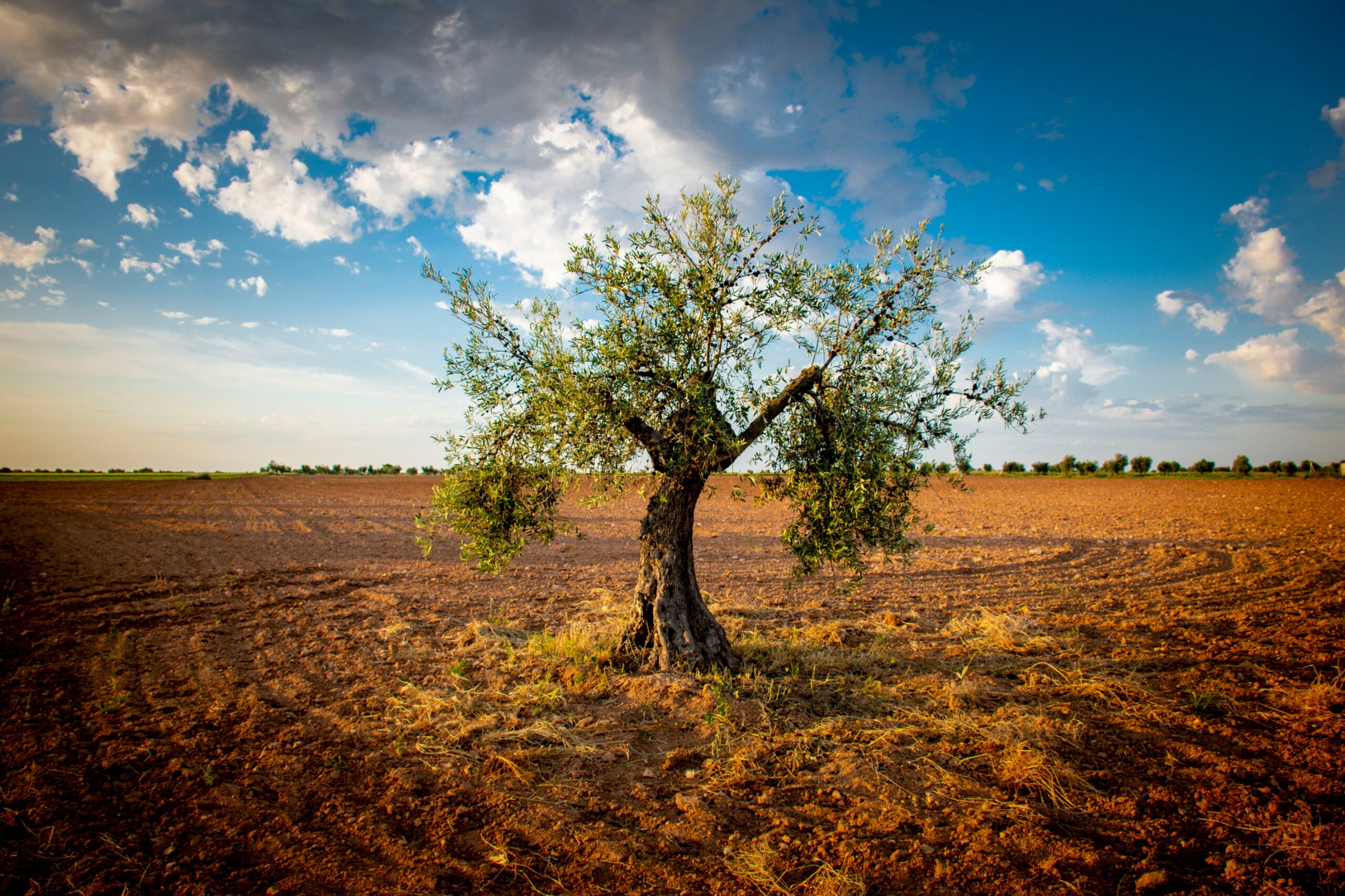
Olive trees are green, gold, and beautiful against the desert terrain, where they stand bright green in contrast to the harsh brown and golden sands and rocky grounds. They are grounded with deep and rich roots and withstand the overbearing heat, remaining upright and strong, and causing the desert to bloom and blossom. This echoes the promise of God that he will restore and rebuild His people and cause them to bloom and grow strong in the desert and wastelands (Isaiah 35:1), so that we might be “a green olive tree, beautiful with good fruit (Jeremiah 11:16).” When our hearts are rooted in the Lord, we are sustained in the wastelands, and can serve by God’s grace as a beautiful contrast in a broken world, pointing to our Creator as the one who restores our souls in Him.
Romans 11:24 illustrates our restoration in the Lord in a more specific way with an analogy following the Gentiles, who are branches cut out of a wild olive tree and grafted into a cultivated olive tree. You may realize some similarities between this analogy in Romans and the analogy Jesus himself gives regarding the vine and the branches in John 15. According to Paul in the book of Romans, If the Gentiles could be taken from their own wild ways and ungodly natural habitat and grafted into a healthy tree cultivated by God, then God could also restore the people of Israel back to their original intended place. “For if you were cut out of the olive tree which is wild by nature, and were grafted contrary to nature into a cultivated olive tree, how much more will these, who are natural branches, be grafted into their own olive tree?” (Romans 11:24)
Without putting our faith, trust, and obedience in the Lord, we lose the strength and support that causes us to thrive in the desert. In the Bible, nations are depicted as olive trees, of which God is the farmer. He knows exactly what we need and gives us abundantly more than we could ever hope for.
King David reflects on his trust in the Lord in Psalm 52:8 and states, “But I am like a green olive tree in the house of God; I trust in the mercy of God forever and ever.” This verse emphasizes the importance of being rooted in the Lord’s presence, where we find nourishment and stability.
May we learn to trust in the goodness and mercy of God and stand strong in the wastelands of this broken world, living like olive trees nourished, pruned, and cultivated by the Lord!
Written by NBB Alumna: Emma Fernandez