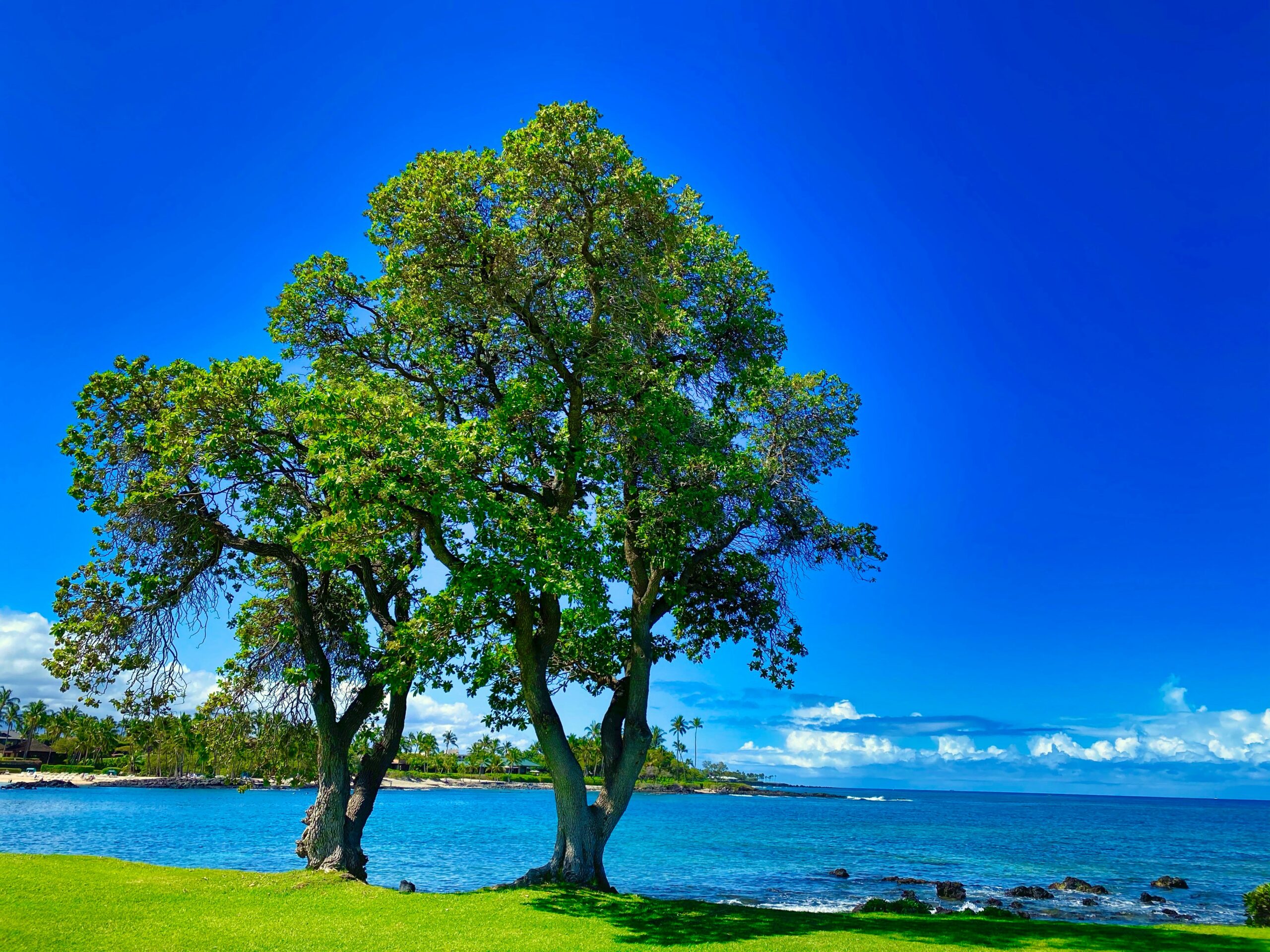
The picture of a flourishing plant is used multiple times throughout Scripture as an illustration of what it means for God’s people to thrive. The book of Psalms opens with this imagery—Psalm 1:3 says that the righteous “shall be like a tree planted by the rivers of water, that brings forth its fruit in its season, whose leaf also shall not wither; And whatever he does shall prosper.” Psalm 1 takes us on a journey of what it means to flourish, what happens if our roots are not in Christ, and the key to thriving.
When we are planted in the house of the Lord, we are described as a tree planted by rivers of water. A tree that is planted by a living source of water never lacks and has a continual source of life to let its roots grow deep and strong. In a similar way, we find that Jesus is our living water, and when we freely drink of His water, we will never lack any good thing. The water He gives us becomes “a fountain of water springing up into everlasting life” (John 4:14). This water, unlike any earthly water, satisfies us eternally—we never have to thirst again. There is a living stream that is not dependent on any circumstances or external droughts we may face. We can still thrive and be satisfied in droughts as the Lord guides and strengthens us continually because His waters do not fail (Isaiah 58:11). The beauty about this living water is that Jesus gives it freely to those who thirst (Revelation 21:6). To those who want to flourish Jesus beckons them to Him: “He who believes in Me, as the Scripture has said, out of his heart will flow rivers of living water.” (John 7:38).
When we dwell in the courts of God, we are like a tree that bears fruit in season and whose leaves do not wither. A tree that continually bears fruit and does not wither shows its strength and its health—it shows that its roots are deep and that it is receiving all the things it needs to grow. In the same way, when we are bearing fruit, our roots are deep and strong in the true vine, Jesus (John 15:1-8). When we abide in Jesus, we remain in Him, “rooted and built up in Him and established in the faith” (Colossians 2:7). However, for a tree to bear fruit, it also needs to be pruned. This process in our lives is not always easy, but testing our faith produces patience that enables us to be “perfect and complete, lacking nothing” (James 1:3-4). The Father prunes the branches so that we may bear more fruit (John 15:2). Unlike a real tree that can only bear fruit for a time, when we are planted in God’s courts, we continue to bear fruit in old age to declare His goodness (Psalm 92:14). Abiding in Jesus does not lead to withering leaves even in old age or periods of hardship—it leads to increased fruitfulness and life in Him.
What about those who are not in the Lord’s courts? Psalm 1 describes these people as the ungodly who are like chaff. The imagery of chaff is quite different from that of a tree. Chaff is dead and without substance, easily carried away. These people are fleeting, living unstable, unfulfilled lives. When it seems the ungodly may be flourishing outwardly, their roots have no anchor. The wind will soon test their substance and drive it away in a moment. Scripture says that those who do not abide in Jesus are “withered” and “burned” (John 15:6). When the time comes for judgment, the ungodly have no place to stand (Psalm 1:5). Ultimately, the trials of life test our roots. When we are thriving in Jesus, we will prosper. When we have attempted to dig our roots elsewhere, we will perish.
But how do we become like this tree that flourishes? Psalm 1 opens with clear instructions. The righteous man “walks not in the counsel of the ungodly, nor stands in the path of sinners, nor sits in the seat of the scornful” (Psalm 1:1). In order to refrain from sinning, the followers of God have to know what sin is and understand the importance of being holy. The Bible says that the righteous man can only cleanse his way by taking heed to the word of God and hiding it in his heart (Psalm 119:9, 11). That is why Psalm 1 goes on to say that the righteous’s “delight is in the law of the LORD, and in His law he meditates day and night” (Psalm 1:2). The only way we can thrive is when we know the Lord and delight in knowing Him. Through the Scriptures, the Lord reveals Himself to us—His character, His plans and purposes, who we are, and instruction for our lives. The only way to abide and be planted in the courts of the Lord is to have a personal relationship with Him and to desire to know Him more. The psalmist describes this as a hunger—a desire that only finds pleasure in the word of God. To “ grow in the grace and knowledge of our Lord and Savior Jesus Christ,” we need to choose to find delight in God’s word (2 Peter 3:18). Like Jeremiah, our response should be this: “Your words were found, and I ate them, and Your word was to me the joy and rejoicing of my heart; for I am called by Your name, O LORD God of hosts.” (Jeremiah 15:16).
Jesus came and died for us, not simply to give us life, but that we could have it more abundantly (John 10:10b). We have been created to be a thriving, flourishing tree, well-watered and bearing fruit. There may be many obstacles that may hinder us from living the fruitful life that God has called us to. But God gives us all we need to abide in Him. Even in those seasons of drought, we can still bear fruit. Even in those seasons of fiery heat, our leaf can remain green. We have a choice to stay away from evil and a choice to spend time in the Word. Only when God’s law is our delight can we flourish, even in affliction (Psalm 119:92). Let us choose to set aside time to dive deep into God’s word and to continually meditate and find joy in Him and His word. Like the psalmist, let us choose to declare, “Oh, how I love Your law! It is my meditation all the day.” (Psalm 119:97).
“Those who are planted in the house of the LORD shall flourish in the courts of our God. They shall still bear fruit in old age; They shall be fresh and flourishing, to declare that the LORD is upright; He is my rock, and there is no unrighteousness in Him.” –Psalm 92:13-15
Written by NBB Alumna: Annelisa Stephen